
Social media · English
Why Thought Leadership on LinkedIn Is Becoming a Competitive Advantage for Lawyers
Visibility Alone Doesn't Build a Reputation—Consistent Expertise Does.

Not every lawyer wants to become an influencer.
And they don't have to.
The real opportunity on LinkedIn isn't chasing likes or viral posts. It's building professional credibility with the people who matter most—potential clients, referral partners, journalists, business leaders, recruiters, and fellow legal professionals.
In today's digital-first world, people don't just search for legal expertise. They look for evidence of it.
Increasingly, that evidence is found on LinkedIn.
The Modern Referral Often Starts Online
Referrals remain one of the strongest sources of new business for law firms.
However, today's referral process rarely ends with a phone call.
When someone recommends a lawyer, the next step is usually the same:
They Google the name.
They visit the firm's website.
They open the lawyer's LinkedIn profile.
According to LinkedIn, the platform has more than one billion members worldwide, including executives, entrepreneurs, business owners, and decision-makers across virtually every industry.
Before making contact, many people want reassurance that the recommendation is the right one.
Your LinkedIn presence helps provide that reassurance.


Expertise Should Be Visible
Many exceptional lawyers remain relatively unknown outside their existing network.
Not because they lack knowledge.
Not because they lack experience.
But because their expertise is rarely visible to people who have never worked with them.
Publishing thoughtful content helps bridge that gap.
Sharing practical legal insights, commentary on industry developments, or observations from your area of practice allows people to understand how you think—not just what you do.
That distinction matters.
Clients hire lawyers for their judgment as much as their qualifications.
Thought Leadership Builds Trust Before the Conversation Begins
The Edelman Trust Barometer consistently shows that expertise and transparency are among the strongest drivers of trust.
For legal professionals, thought leadership is one of the most effective ways to demonstrate both.
A short article explaining changes in employment legislation.
A post discussing emerging privacy regulations.
A practical guide for business owners navigating commercial contracts.
Content like this educates first and promotes second.
Over time, people begin to associate your name with valuable insight rather than advertising.
That is the foundation of professional authority.
LinkedIn Creates Opportunities Beyond Client Acquisition
One of the biggest misconceptions about LinkedIn is that it exists solely to generate new clients.
In reality, a strong professional presence often creates opportunities that cannot be predicted.
Lawyers with consistent visibility are more likely to receive invitations to:
- Speak at conferences and industry events.
- Contribute to legal publications.
- Participate in podcasts and webinars.
- Collaborate with other professionals.
- Build referral relationships with complementary service providers.
- Be recognised as subject matter experts within their field.
Each opportunity strengthens credibility, which in turn creates even more opportunities.
This is known as the authority effect—where visible expertise attracts further recognition.
Consistency Matters More Than Frequency
Many professionals believe they need to post every day to stay relevant.
That isn't necessarily true.
Quality consistently outperforms quantity.
One insightful article each month.
A thoughtful post each week.
Occasional commentary on legal developments.
These small but consistent efforts gradually build familiarity.
Marketing research has long demonstrated that repeated, positive exposure increases recognition and trust.
Professional visibility works the same way.
People are more likely to remember lawyers whose expertise they encounter regularly.
Build a repeatable editorial rhythm
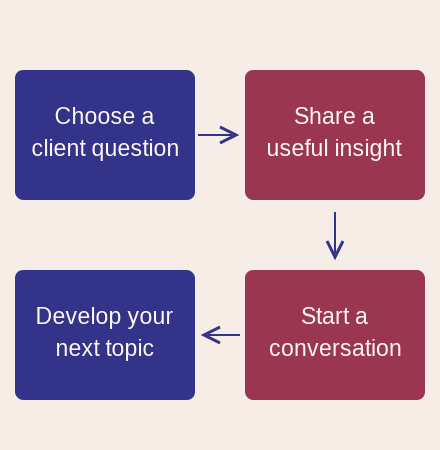
A Practical Framework for Lawyers
If you're wondering where to begin, focus on creating content that answers the questions your clients ask most often.
Consider sharing:
- Explanations of recent legal developments.
- Common misconceptions within your practice area.
- Practical guidance for businesses and individuals.
- Lessons learned from industry trends.
- Professional perspectives on topics affecting your clients.
The goal is not to give away legal advice.
The goal is to demonstrate the depth of your thinking and the value of your expertise.
Your Reputation Shouldn't Depend on Chance
Every lawyer builds a reputation through years of hard work.
LinkedIn simply provides a platform to make that reputation more visible.
The professionals who consistently share knowledge are not just marketing themselves.
They are contributing to their profession, educating their audience, and making it easier for the right people to discover their expertise.
In an increasingly connected world, visibility is no longer about self-promotion.
It is about ensuring that your knowledge reaches the people who can benefit from it.
When expertise is communicated consistently, opportunities follow naturally.
Discussion
What type of LinkedIn content do you believe creates the greatest value for legal professionals—educational insights, industry commentary, case studies, or something else?
I'd enjoy hearing your perspective.
www.jurinity.com
Hashtags
#Jurinity #LinkedInForLawyers #LegalMarketing #ThoughtLeadership #LegalProfessionals #ProfessionalBranding #LawFirmMarketing #Lawyers #PersonalBranding #BusinessDevelopment